
From Boric to Kast: Chile’s political shift and the United States' advance in South America
- May 14
- 6 min read

On March 11, 2026, José Antonio Kast, founder of the Republican Party and former congressman for the Independent Democratic Union, assumed the presidency of Chile, and on April 6, less than a month later, embarked on his first official foreign trip to Argentina, where he was received by Javier Milei at the Casa Rosada. The embrace between the two leaders, captured by international news agencies, brought to an end a phase of diplomatic friction that had characterized Argentina–Chile relations under the presidency of Gabriel Boric and inaugurated a new bilateral axis sustained by explicit ideological affinity and a shared agenda centered on security, energy, mining, and border crossings, as both governments identify narcotrafficking, transnational organized crime, and extra-regional influence as common threats justifying accelerated rapprochement.
Kast’s Political Profile: Radical in Origin, Pragmatic in Delivery
Kast is 60 years old and has accumulated two and a half decades of political experience, including sixteen years as a congressman for the Independent Democratic Union (UDI), a party founded in the 1980s and historically linked to the legacy of the dictatorship of Augusto Pinochet. In 2016, he left the UDI in order to build an independent presidential candidacy, and in 2019 founded the Republican Party, the political organization through which he contested the 2021 election, losing to Gabriel Boric in the runoff by 56% to 44%. However, in November 2025, Kast returned to the race with 23.9% in the first round, expanded his coalition, and won the runoff with 58.2% of the vote — a trajectory that allows for two opposing interpretations, as it combines elements of radical ideological continuity with repeated signals of moderation.
From this perspective, Patricio Navia — professor of liberal studies at New York University and professor of political science at Diego Portales University — argued in an analysis published by Americas Quarterly that Kast is likely to govern as a pragmatic conservative rather than as a right-wing populist. Unlike the tariff-oriented conservatives of the Global North, the president explicitly supports free trade and adopted a deliberately moderate tone during visits to Javier Milei and Nayib Bukele, stating that he is “not about the chainsaw” and that Chile, given its legal system, would not replicate Salvadoran security policies. Moreover, while in El Salvador, he avoided endorsing bitcoin as a national currency, and in his election-night speech — ironically nicknamed by the local press “Let’s Make Chile Boring Again” — he urged Chileans to respect the rules and go to work early, in contrast to the rupture-oriented rhetoric of the radical right.
Nevertheless, this pragmatism coexists with a hardline agenda. Throughout the campaign, Kast promised, among other measures, mass deportations, the excavation of a trench along the Bolivian border, harsher criminal policies, restrictions on abortion, and greater flexibility in police use-of-force rules. The most careful interpretation, as Navia suggests, is that the president will seek to balance the moderate electorate that brought him to power with the radical base that has supported him since 2017.
Furthermore, public opinion currently works against him. A poll conducted by Cadem and cited by El País on April 6 showed approval ratings falling from 57% to 42% during his first month in office amid the administration’s decision not to shield domestic fuel prices from international market increases. In addition, 52% of Chileans believe the country is heading in the wrong direction, while 78% consider the economy stagnant or in decline. Consequently, the meeting with Milei took place under domestic pressure on both sides of the Andes.
The Rapprochement: Personal Friendship, Shared Agenda, and the Apablaza Case
Milei and Kast met in 2022 at the Conservative Political Action Conference (CPAC) held in São Paulo, from which a consistent political dialogue emerged. Since then, Milei publicly supported Kast’s presidential candidacy, attended his inauguration in Santiago, and was reciprocated with Kast’s first post-election visit to the Casa Rosada. The choice of Argentina as the first official destination follows Chilean diplomatic tradition, observed even by Boric in 2022; however, this time it acquired an ideological density absent from the previous institutional gesture.
According to MercoPress, the declared agenda of the private meeting revolved around three axes: bilateral trade; the exploitation of natural resources, especially energy and mining; and improvements to border crossings, in line with the more than five thousand kilometers of frontier shared by the two countries. The Chilean delegation was led by Foreign Minister Francisco Pérez Mackenna and included Security Minister Trinidad Steinert and Public Works Minister Martín Arrau. Before departure, Kast openly articulated the political tone of the trip, declaring to the press that “we have common enemies attacking our nations, and we must confront them together,” referring to narcotrafficking and transnational organized crime.
However, the symbolic anchor point of the visit was the extradition of Galvarino Apablaza, former member of the Manuel Rodríguez Patriotic Front (FPMR), who is accused of masterminding the 1991 assassination of Senator Jaime Guzmán, founder of the UDI and a figure close to the Kast family. Apablaza, who had lived as a refugee in Argentina for decades, had his refugee status revoked by the Milei administration. Yet when Argentine police attempted to arrest him on the Wednesday preceding the visit, the former guerrilla had already fled. In response, the Argentine government offered a reward of twenty million pesos — approximately fourteen thousand dollars — for information leading to his capture. The delivery of the former guerrilla, promised by Kast during the campaign, had been expected to serve as the symbolic climax of the trip, but it ultimately failed to materialize. “Justice will come, sooner or later,” the Chilean president declared before departure — a statement that simultaneously conveyed resignation and underscored the open pressure between ideologically aligned allies.
The Hemispheric Chessboard: What Changes for the United States
Within this context, the rapprochement between Buenos Aires and Santiago must be interpreted within the broader framework of the hemispheric realignment currently underway. On March 7, 2026 — four days before Kast’s inauguration — Donald Trump gathered twelve heads of state in Doral, Florida, to launch the “Shield of the Americas,” a political coalition aimed at combating narcotrafficking and containing Chinese and Russian influence in the region. Among the invited countries, Argentina and Chile attended, whereas Brazil, Mexico, and Colombia did not receive invitations to the summit.
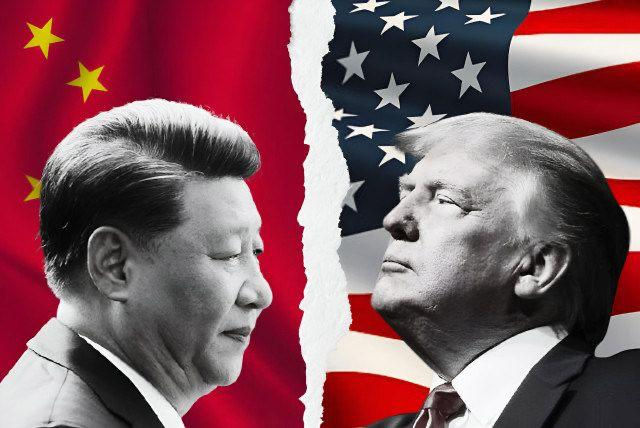
From this perspective, what emerges is an Atlantic-Pacific ideological arc composed of radical right-wing governments aligned with Washington, advancing over spaces previously occupied by the regional left, while the Kast–Milei rapprochement functions within this arc as a reinforcement of political cohesion. Consequently, for the United States, the realignment entails three relative gains. First, greater predictability in the hemispheric security agenda, particularly regarding the treatment of criminal organizations and authorization for military cooperation within sovereign territories. Second, the opening of opportunities to reverse critical infrastructure projects linked to China, such as the Hong Kong–Chile submarine cable authorized under Boric and currently suspended after the United States Department of State revoked the visas of three former government officials in February 2026. Third, the formation of a regulatory belt favorable to American interests in mining, energy, and data infrastructure, counterbalancing the diversification strategy proposed by Luiz Inácio Lula da Silva, Gustavo Petro, and Claudia Sheinbaum.
Yet, structural limits constrain this alignment. China is Chile’s principal trading partner, accounting for 40% of exports and 25% of imports, according to data revisited by Americas Quarterly, compared to 15% and 20% for the United States. Consequently, Kast will need to manage this interdependence without incurring additional electoral costs in a scenario where his approval ratings have already contracted significantly. Milei operates under a similar horizon, facing economic stagnation and political scandals surrounding his administration, including allegations involving Chief of Cabinet Manuel Adorni, who is under investigation over private jet travel and real-estate acquisitions allegedly incompatible with his declared income. Thus, although the ideological affinity between the two leaders is real and operational, it does not eliminate the political fragility of either administration.
Therefore, for Latin America, the emerging configuration is that of a region increasingly divided along a clear ideological frontier, in which, on one side, stands a liberal-conservative Southern Cone aligned with Washington, and on the other, an axis formed by Brazil, Mexico, and Colombia, which tends to deepen commercial and strategic relations with China. Read within this context, the reversal in Argentina–Chile relations does not constitute an isolated bilateral episode, but rather the clearest sign of a hemispheric reorganization in which regional sovereignty and the autonomy margins of Latin American economies are once again becoming objects of dispute — now under the logic of the “Donroe Doctrine.”
Guilherme Cucco and Felipe Ribeiro


Comments