
Between cooperation and containment: the limits of China´s presence according to the United States
- May 11
- 6 min read
Updated: May 14
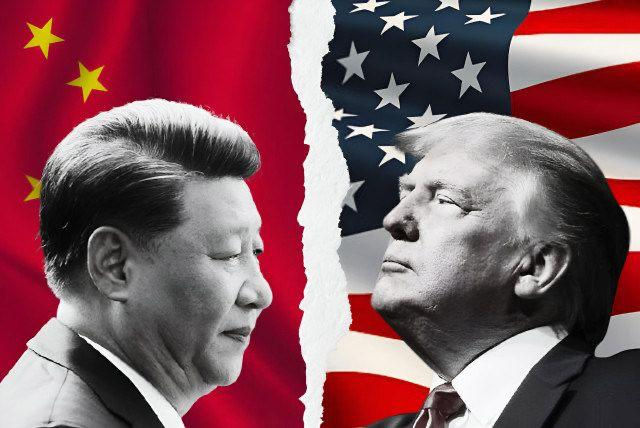
On January 3, 2026, American military aircraft departed from 20 bases, disabled Venezuela’s air defense systems through cyber means, extracted Nicolás Maduro in handcuffs from his residence in Caracas, and transferred the Venezuelan leader to a federal prison in Brooklyn in an operation the U.S. Joint Chiefs of Staff codenamed “Absolute Resolution,” becoming the most significant direct U.S. military intervention in Latin America since the 1989 invasion of Panama. The move signaled, unequivocally, that the United States had ended three decades of strategic neglect toward the region. To understand why this happened, it is necessary to understand the historical trajectory of American policy in Latin America.
The 1959 Cuban Revolution inaugurated the period of greatest American interventionism in the history of Latin America, as Washington came to view any left-wing government in the region as a potential vector for Soviet expansion, turning the Western Hemisphere into a permanent theater of the Cold War. During the Cold War, the United States contributed to the overthrow of nine governments in the 1960s alone — one every 13 months — in addition to supporting the 1964 Brazilian military coup, the Pinochet regime in Chile in 1973, the Nicaraguan Contras in the 1980s, and the invasion of Grenada in 1983, making it evident that American attention toward the region was directly proportional to the perceived Soviet threat. With the collapse of the Soviet Union in 1991, this equation was reversed, shifting Washington’s focus toward the Middle East and Asia. Latin America came to be perceived as a “secured territory” that required neither attention nor strategic effort, generating a three-decade strategic vacuum that China filled systematically with capital and long-term planning.
The Belt and Road Initiative (BRI), launched by Beijing in 2013, accelerated a trend already visible since the 2000s. In 2001, Cuba was the only country in the region that traded more with China than with the United States. Two decades later, every South American country except Paraguay and Colombia was doing more business with Beijing than with Washington. This transformation was not limited to trade: it expanded into port infrastructure, telecommunications networks dominated by Huawei, and a space presence that exceeds, in Latin America, that of any other region outside Asia. The clearest symbol of this Chinese penetration is the Port of Chancay in Peru, a US$1.3 billion complex majority-controlled by the Chinese state-owned company COSCO, operated by autonomous trucks monitored from Shanghai. The port reduced maritime shipping times between South America’s Pacific coast and China by more than ten days, becoming the logistical axis of a continental reorientation toward Beijing. The Trump administration responded with a phrase that condensed the new American logic for the region with precision: “cheap Chinese money costs sovereignty.”
This logic found formal expression in the National Security Strategy (NSS) of December 2025, which represents one of the clearest formulations of American hemispheric policy since the original Monroe Doctrine of 1823. The document openly proclaims what it calls the “Trump Corollary to the Monroe Doctrine” and leaves little ambiguity: the United States intends to restore its preeminence in the Western Hemisphere, and the principal target — though rarely named directly — is China’s growing presence in Latin America and the Caribbean. The language of the document is assertive: the United States will “deny non-hemispheric competitors the ability to position forces or other threatening capabilities, or to own or control strategically vital assets” in the region.
To understand the American sense of urgency, it is necessary to grasp the scale of what China has built in the region over the last two decades. In Panama, American pressure resulted in the judicial annulment of the concession under which Hong Kong-based CK Hutchison had operated the Balboa and Cristóbal terminals for nearly three decades, with the terminals transferred to Western subsidiaries under provisional contracts. Beijing responded by detaining 123 vessels in March 2026, 91 of them under Panamanian flag, making it impossible to justify the move as a mere technical routine. In Chile, the mere consideration of a submarine fiber-optic cable linking Valparaíso to Hong Kong triggered American visa restrictions against the Chilean minister of transportation, effectively classifying an infrastructure decision as a geopolitical alignment choice. In Costa Rica, Chinese companies operating from Nicaraguan territory purchase gold-bearing sediment extracted illegally from Costa Rican soil, using techniques capable of recovering up to 95% of the gold contained in each sack, in a scheme that Public Security Minister Mario Zamora denounced before Parliament as transnational organized crime with stable logistics, financing, and trafficking routes.
The American counteroffensive on the economic front revolves around two complementary programs: Project Vault and FORGE. Project Vault combines US$10 billion from the U.S. Export-Import Bank with US$2 billion in private capital to create a strategic reserve covering all 60 minerals listed as critical by the U.S. Geological Survey. FORGE (Forum on Resource Geostrategic Engagement), described by Secretary Marco Rubio as a replacement for the Minerals Security Partnership “with sharper teeth and a commitment to speed,” creates a preferential trade and investment zone for critical minerals with coordinated price floors designed to counter China’s practice of exporting minerals below market cost. In this way, China undermines Western productive capacity and deepens the structural dependence of producing countries, while the American logic seeks to discipline the market through tariffs where the Chinese approach seduces through direct financing.
Moreover, Beijing has become the principal trading partner of several South American countries, including Brazil, Chile, Peru, and Argentina. China has invested heavily in infrastructure — ports, railways, hydroelectric plants, telecommunications networks — and expanded its financial presence through bilateral loans that, in many cases, replaced the traditional multilateral financing historically dominated by Washington. The NSS itself acknowledges the scale of the challenge by admitting that China has “recycled perhaps $1.3 trillion of its trade surpluses into loans to its trading partners” and that the United States and its allies “have yet to formulate, much less execute, a joint plan for the so-called Global South.” It is within this context of relative American neglect and Chinese expansion that the Trump administration’s policy emerges — not as a novelty, but as the acceleration and systematization of trends that were already taking shape. The strategic response proposed by the NSS combines what the document calls “Recruit and Expand” — recruiting existing regional allies while expanding the network of partners. The declared objective is to make the United States “the partner of first choice” in the Hemisphere while discouraging Latin American countries from collaborating with external actors. To accomplish this, Washington envisions the combined use of diplomatic pressure, financial instruments, preferential trade agreements, technology-sharing arrangements, and defense cooperation. The NSS is explicit about the power logic underlying this approach: the terms of agreements with countries dependent on the United States “must be sole-source contracts for our companies,” and preferential access to the American market will be used as leverage to induce geopolitical choices favorable to Washington.
The comparison with the BRI is revealing. Whereas the Belt and Road Initiative offers capital, physical infrastructure, and technology transfer across entire sectors of the economy, FORGE and Project Vault propose a state-managed market architecture coordinating prices and stockpiles in specific minerals. In other words, Washington is responding to a continental strategy with a sectoral instrument, making it evident that an American equivalent to the BRI in the realm of broad infrastructure still does not exist.
The Center for Strategic and International Studies (CSIS), the leading American foreign-policy think tank, recommended in March 2026 that Washington announce an “Infrastructure Pact of the Americas,” involving between US$50 and US$100 billion in investments for ports, highways, energy grids, and telecommunications networks, co-financed with Japan, South Korea, the European Union, and the Inter-American Development Bank — a proposal that remains only on paper. The most critical asymmetry in the Sino-American dispute in the region is neither military nor diplomatic, but infrastructural, since previous American initiatives with similar objectives, such as the Partnership for Global Infrastructure and Investment launched at the 2022 G7 summit as a direct counterweight to the BRI, no longer maintain even an active website today. This ensures that Latin American countries’ structural distrust toward Washington’s long-term commitments is, in itself, a strategic asset for Beijing.
The systemic American response consolidated itself at the Shield of the Americas Summit, held in March 2026 at the Trump National Doral resort in Miami, bringing together 17 countries under agreements on military cooperation, intelligence-sharing, and partnerships in critical minerals. The deliberate exclusion of Brazil, Mexico, and Colombia signaled that Washington had begun interpreting neutrality not as a legitimate posture, but as implicit alignment with the adversary. China, however, has shown no intention of retreating. BYD declared its goal of becoming the largest automobile manufacturer in Brazil by 2030, while the state-owned company Chalco finalized an US$886 million agreement to acquire a controlling stake in Companhia Brasileira de Alumínio. This makes clear the structural obstacle Washington faces: the challenge is no longer preventing Chinese entry into the region, but attempting to reverse a presence that is already consolidated within the perimeter itself, ensuring that Latin America is definitively back at the center of superpower competition — this time against an adversary that did not arrive from outside the Hemisphere, but was built, contract by contract, within it.
Aline Simioli and João Lucas Alves


Comments